
For the past decade, the story of commerce has been dominated by one narrative: eCommerce wins. Faster delivery. Infinite selection. Lower prices. The assumption was that local retail, the kiranas, the neighbourhood boutiques, the independent electronics stores, would simply fade into the background as Amazon, Flipkart, and Meesho captured everything.
That narrative is unravelling.
A quieter, more powerful shift is underway. Consumers are rediscovering local. Not out of nostalgia, but out of preference. And the businesses that understand this shift, and position themselves at the centre of it, will define the next decade of commerce in India.

What is Hyperlocal Commerce, Really?
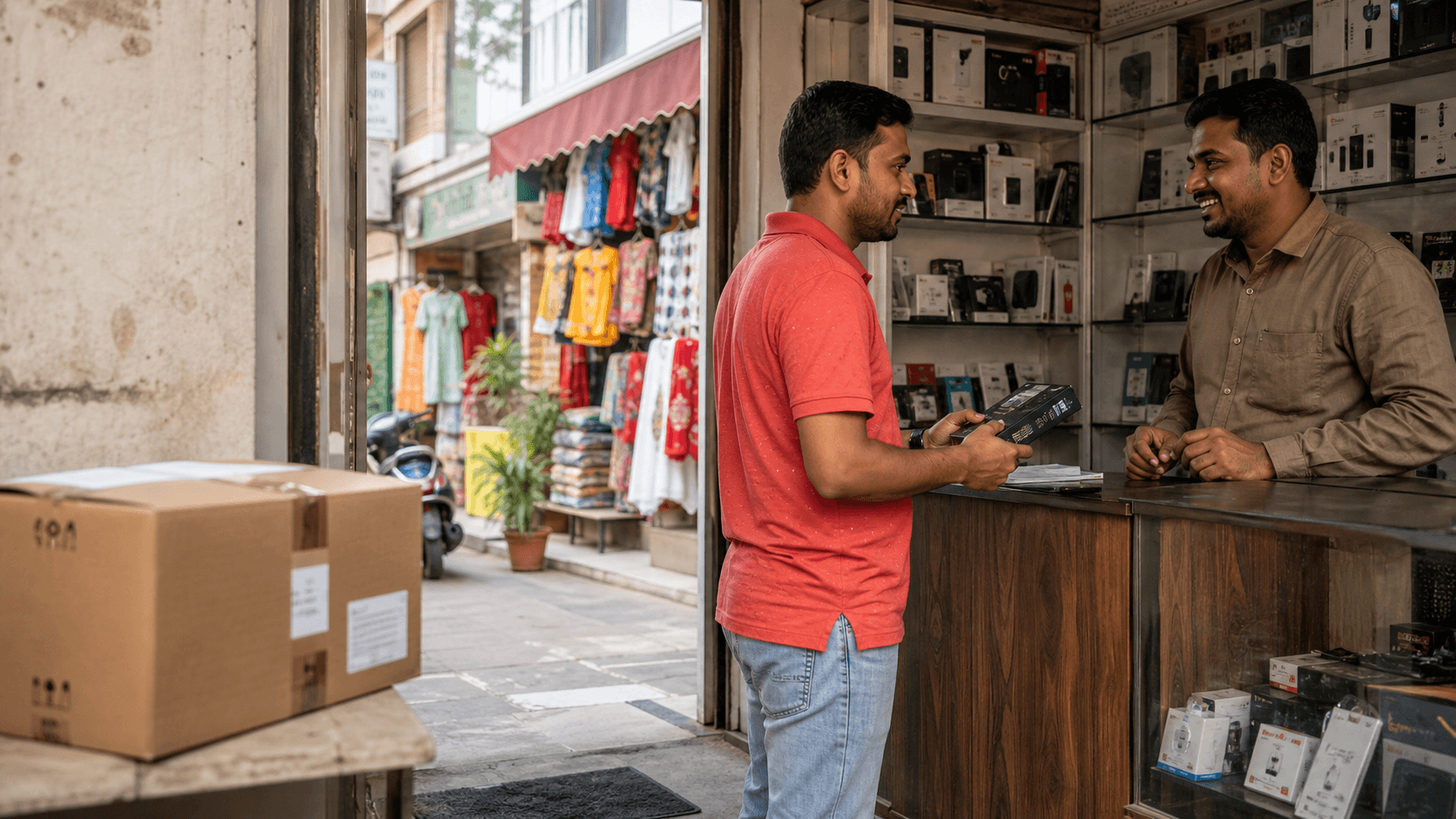
Hyperlocal commerce is the model where transactions happen between buyers and sellers within a defined geographic radius, typically 5 to 10 kilometres. It's the store down the street that stocks the exact skincare brand you want. It's the electronics shop in the next lane that can actually explain what you're buying. It's the fashion boutique that knows what's trending in your city before national brands catch on.
The conventional framing has been about logistics: faster delivery, same-day shipping, lower last-mile costs. While that matters, it misses the deeper driver of why hyperlocal is growing.
“The real driver is trust and relevance.”
Local businesses carry something that no national eCommerce platform can manufacture: proximity-based trust. When consumers know they can walk into the store, see the product, speak to someone who knows what they're talking about, and get a resolution if something goes wrong, the decision calculus changes fundamentally.
The Problem With How We've Been Thinking About It
The current conversation around hyperlocal commerce is almost entirely delivery-obsessed. The industry measures hyperlocal by delivery time, logistics efficiency, and supply chain coverage. These are operational metrics for a logistics problem.
But most local commerce doesn't involve delivery at all.
Think about how you actually shop locally. You walk past a new café. You hear about a sneaker store from a friend. You search your phone trying to find where to buy something nearby. You look at pictures of a menu before deciding where to eat. You check if a store actually stocks what you're looking for before making the trip.
“This entire decision-making layer, the one that happens before you ever step foot in a store or open a delivery app, is almost completely unaddressed by existing platforms.”
Instagram shows you content but can't show you catalogues or pricing. Google Maps shows you a pin but not what's actually available. Zomato and Swiggy cover food but nothing else. The rest of local commerce, fashion, electronics, beauty, wellness, lifestyle, home goods, is largely invisible online.
Why Discovery is the Real Disruption
Hyperlocal commerce will not be disrupted by faster delivery. It will be disrupted by better discovery.
The consumer behaviour shift is already here. People are increasingly using their smartphones not just to order things, but to decide what to buy and where to go. They browse catalogues before visiting. They check photos and reviews before stepping out. They want to know what's available, at what price, at what store, right now, before making any commitment.
“This is the pre-visit decision moment. And whoever owns this moment owns local commerce.”
500M+
Urban smartphone users in India
GSMA Intelligence, 2024
60M
Local businesses, mostly invisible online
Ministry of MSME, India
5–10 km
The hyperlocal radius that changes everything
Consider what this means for the market: A user searching for Korean skincare stores should be able to browse product catalogues from nearby beauty stores, see real customer photos, check pricing, and decide, all without leaving their phone. A user looking for formal wear should discover which local boutiques are trending, what styles are available, and what other shoppers in the neighbourhood are saying.
Discover Nearby
Start exploring what's around you.
Download it and see what's near you.
The Mobile Shift is Cementing Hyperlocal's Advantage
Smartphone penetration in urban India has crossed 500 million users. More importantly, the behaviour has shifted: people are making decisions on their phones that used to require physical exploration. The smartphone is now the first step in almost every purchase journey, online or offline.
This creates a structural advantage for hyperlocal over national eCommerce. A hyperlocal discovery platform can give a user exactly what they need within seconds: products nearby, businesses nearby, people who've already visited and shared their experience. The feedback loop is tight, the relevance is immediate, and the trust is anchored in physical proximity.
National eCommerce platforms compete on price and variety. Hyperlocal commerce wins on relevance, trust, and experience.
The Community Loyalty Loop
One of the most underappreciated dynamics in local commerce is the loyalty effect. When consumers discover a local business they love and it becomes part of their neighbourhood routine, the loyalty runs deeper than any points programme from a national retailer can replicate.
This is community commerce. And it is fundamentally social. When your friend recommends the new chocolate shop that opened nearby, you trust that more than any ad. When you see that 47 people you know have reviewed the same bakery, the decision is made before you even look at the menu. When you earn rewards for discovering and engaging with local businesses, the act of exploration becomes its own reward loop.
“The social layer of local commerce has never been properly built. It's the missing piece, and it changes everything.”
What This Means for the Future
Hyperlocal commerce will not replace eCommerce. They serve different needs. But the idea that eCommerce would consume all local retail has proven wrong.
National eCommerce
Commodity goods, planned purchases, price-sensitive categories
Hyperlocal Discovery
Experience-driven categories, impulse discovery, trust-based decisions, community-endorsed choices
The second layer is being built right now. The businesses, the consumers, and the behaviour are all there. What's been missing is the platform that brings them together in a way that feels native to how people actually shop locally. That platform is being built. And it starts with discovery.