
There is a store two streets from where you live that sells exactly what you've been looking for. You don't know it exists.
There is a café in your neighbourhood that 200 people have reviewed as “the best filter coffee in the area.” You've walked past it a dozen times but never went in because you didn't know.
There is a boutique nearby that carries the exact style you've been scrolling for online, at a better price, with the ability to try it on before buying. It doesn't show up anywhere you look.
“This is the core problem of local commerce in 2026. Not logistics. Not delivery time. Not supply chain. Invisibility.”
The Gap Nobody Talks About
The Indian startup ecosystem has invested heavily in logistics-layer hyperlocal: quick commerce, dark stores, 10-minute delivery, last-mile optimisation. These are genuinely impressive engineering problems and real consumer utilities. But there's a layer that sits further upstream, one that hasn't received the same attention.
How do consumers find and trust local businesses before they decide to buy anything?
This discovery layer is where most local commerce journeys actually begin. Someone wants to find a good electronics store nearby. Someone is looking for a boutique that carries bridal lehengas. Someone wants to know which pharmacy has home delivery. Someone is searching for the best chai place near their office. These are not delivery problems. They are discovery problems.
For everything else, fashion, beauty, wellness, electronics, lifestyle, home, services, the discovery problem is largely unsolved.
Why Physical Presence Still Matters (More Than People Think)
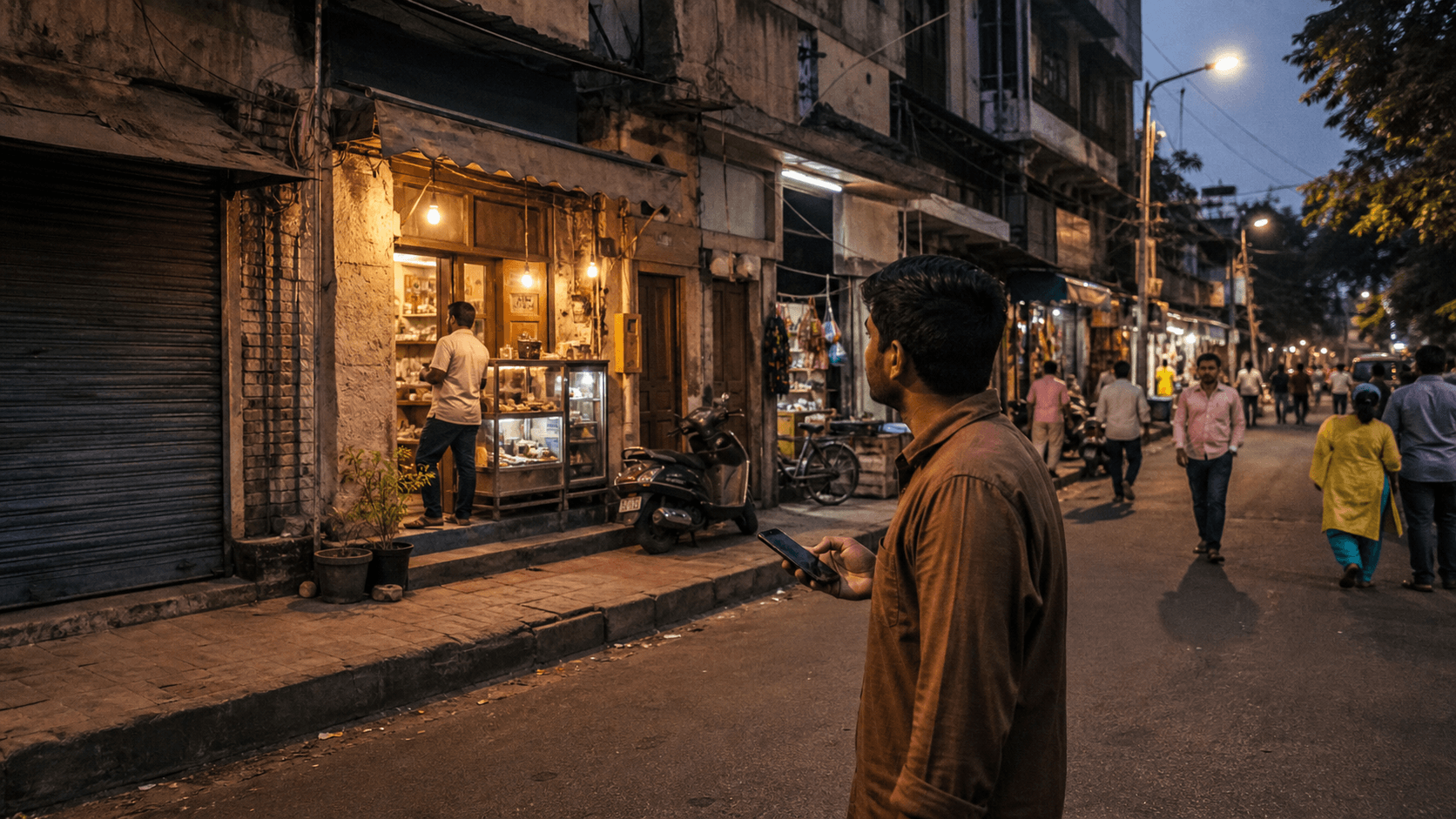
Despite everything eCommerce has done over the past decade, the overwhelming majority of retail in India still happens offline. Consumers still prefer to touch, try, and experience products before buying them. They still trust stores they can physically walk into. They still value the ability to return something by walking back to where they bought it.
The physical presence of a local store is not a relic. It is a feature.
It creates accountability. It creates accessibility. It creates a kind of trust that no eCommerce listing, no matter how many reviews it has, can fully replicate. When something goes wrong with an online order, you're navigating a return portal and waiting two weeks. When something goes wrong with a local purchase, you walk in and sort it out in five minutes. Local businesses have always had this structural advantage. They've just never had the digital infrastructure to make it discoverable.
The Consumer is Already There
The behaviour shift is ahead of the platform. Consumers are already doing proto-versions of hyperlocal discovery, they're just cobbling it together from broken tools. They Google a category and a neighbourhood, scroll through Maps results, check if an Instagram page exists, try to find recent reviews, and eventually make a decision with incomplete information. The journey is fragmented, frustrating, and often ends with the consumer defaulting back to an eCommerce platform, not because it's better, but because it's more complete.
90%+
Of retail in India still happens offline
Deloitte India Retail Report, 2023
60M
Local businesses with no proper digital presence
Ministry of MSME, India
1 in 3
Purchase decisions made on phones before leaving home
Google & Kantar, 2023
When that platform exists, when it's fast, visual, socially rich, and hyperlocal, the behaviour that was fragmented becomes seamless. The consumer finds what they want, sees it reviewed by people in their neighbourhood, browses the catalogue, and makes the visit decision in seconds.
The Social Dimension That Changes Everything
“Discovery is more powerful when it's social.”
Discover Nearby
Start exploring what's around you.
Download it and see what's near you.
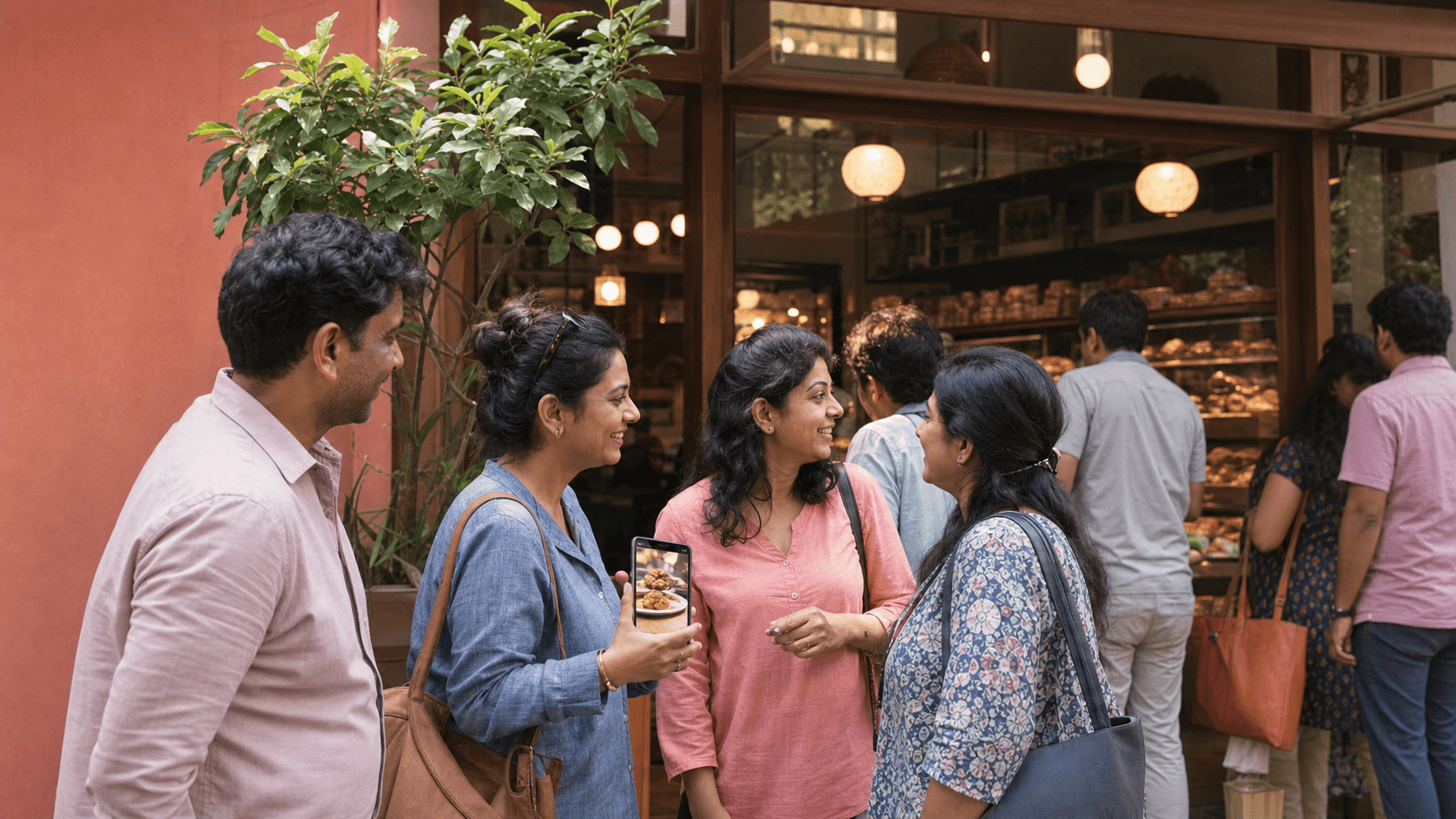
The shift from directory-style local search to socially-powered local discovery is not incremental. It's categorical. When you find a business through a review from someone who lives in your area and has similar preferences, the trust is fundamentally different from a star rating aggregated from anonymous submissions. Community reviews, user-generated content, and peer recommendations are the highest-trust marketing channel available to any local business. Yet this channel is currently captured by no platform in the Indian hyperlocal space.
- New businesses get visibility from day one through community engagement, not just Google crawls.
- Established businesses build a reputation profile that compounds over time.
- Consumers share what they've discovered, creating a word-of-mouth engine that's digital and persistent.
- The neighbourhood develops a shared sense of its own commercial identity: the best spots, the hidden gems, the must-visits.
What the New Discovery Layer Looks Like
Visual-first
Products, storefronts, and experiences presented as rich photo and video content, not text listings. The way people actually evaluate local businesses is through what they can see.
Feed-based
A personalized, location-aware feed of what's new, trending, and relevant in your neighbourhood. Discovery as a continuous stream, not a one-time search.
Socially anchored
Reviews that carry context. Community endorsements. The ability to follow businesses you love and see what they're up to. Recommendations from people in your area.
Catalogue-complete
Every business with a full product or service listing: browsable, filterable, comparable. The same information you'd want in-store, available on your phone.
Rewarding
Discovery that gives back: coins, recognition, community participation, creating a loop where engaging with local commerce is intrinsically enjoyable.
For Businesses: The Levelling of the Playing Field
For too long, digital visibility has been the exclusive territory of businesses with marketing budgets. National brands, funded D2C players, and eCommerce-native companies have commanded digital attention while local businesses remained invisible. A hyperlocal discovery layer changes this entirely.
“When proximity becomes a primary ranking signal, the local business has a structural advantage that no national brand can buy away.”
You are here. Your products are here. Your service is here. No ad spend can replace that. The era of the independent local business being outspent into invisibility is ending. What replaces it is a discovery ecosystem where quality, community, and proximity matter more than marketing budgets.
This is the Beginning
Consumers are shopping with more intentionality. They're choosing local with more frequency. They're trusting community recommendations over algorithm-optimised ads. They're making purchase decisions on their phones before leaving home. They're looking for experiences, not just transactions. The platform infrastructure to capture this behaviour is being built right now.
When it's complete, when every neighbourhood has a discovery layer that makes its local businesses visible, engaged, and accessible, the way we think about local commerce will have permanently changed.
Not because of faster delivery.
Because of better discovery.